
 خبری دربارهی Rarible (RARI)
NFT Marketplace Smart Contracts: Listings, Offers, Auctions, and Royalties
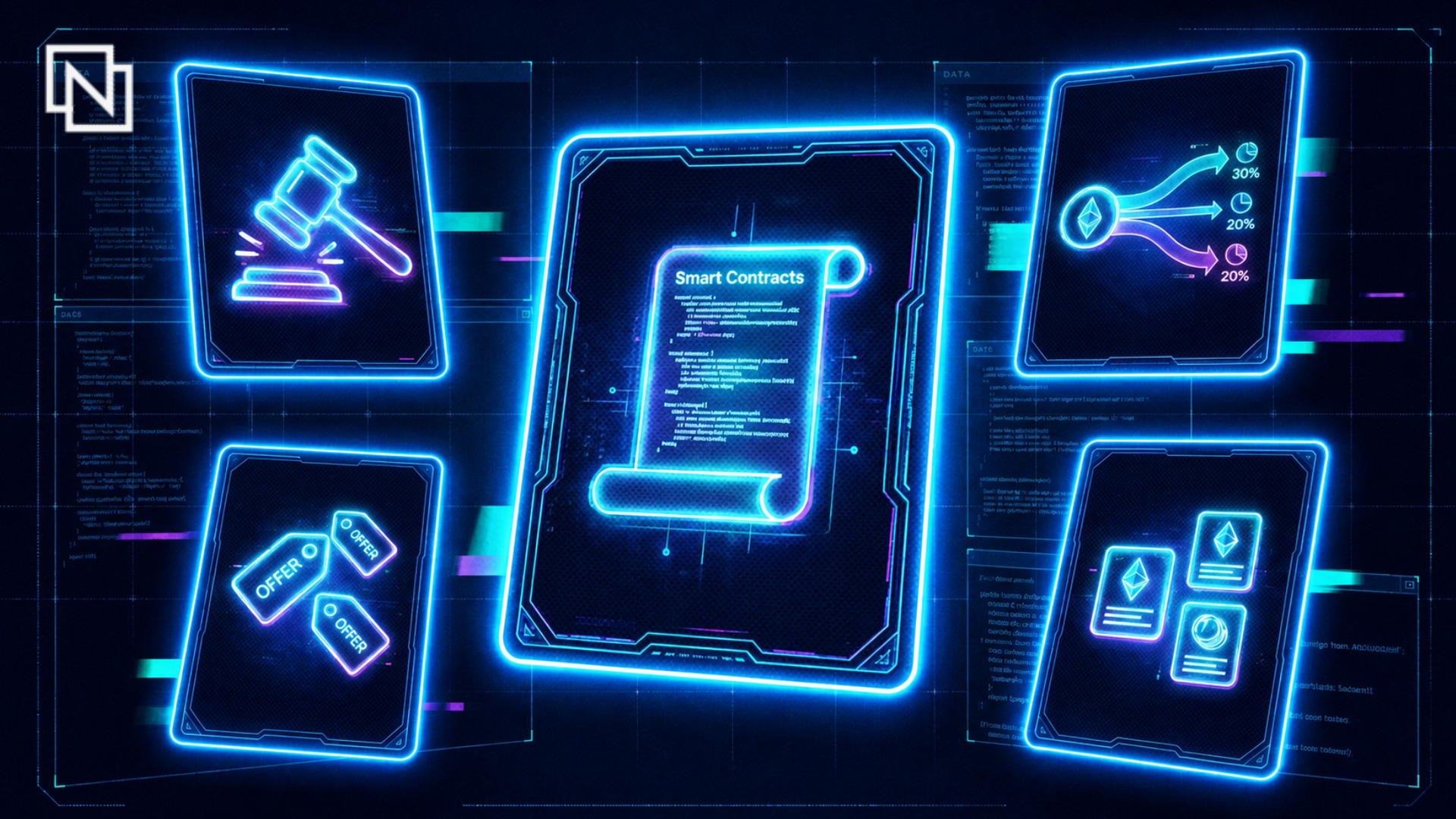
NFT marketplace smart contracts represent listings, offers, auctions, settlement, cancellation, fee routing, royalties, and administrative controls. ERC-721 or ERC-1155 describes the asset; it does not automatically create a safe marketplace. A builder should compare marketplace contracts with the fee and order behavior in the OpenSea marketplace review, the operational layers in the NFT marketplace infrastructure guide, and the payment triggers in NFT passive income models because contract events become the source for settlement and support workflows. NFT smart contracts explained An NFT smart contract is code deployed on a blockchain that creates tokens and controls how ownership is recorded and transferred. When an NFT is minted, the contract assigns a token ID to an owner address. When it is sold or transferred, the contract updates that ownership record after checking the sender's authority and the transfer rules. Contract function What it does What a user can verify Minting Creates a token ID and assigns its first owner Mint transaction, contract address, token ID, and owner Ownership Records who controls an ERC-721 token or an ERC-1155 balance Owner address or account balance onchain Approval Allows a marketplace or operator to transfer a token under defined permission Approved address, operator scope, and revocation transaction Transfer Moves the token between addresses when the rules are satisfied Sender, recipient, token ID, and transaction status Metadata reference Points wallets and marketplaces to the name, image, description, and traits Token URI, media availability, and displayed attributes Administrative controls May allow minting, pausing, burning, or metadata updates Admin address, role permissions, and contract events The contract normally records the token's owner, supply, approvals, transfer history, and a metadata reference. It does not necessarily store the artwork itself. As Hedera's explanation of NFT smart contracts, the token ID and metadata identify the asset, while smart-contract logic handles minting and ownership changes. A smart contract is executable computer code, not automatically a legal agreement about copyright, refunds, or commercial rights. NFT contracts and marketplace contracts The NFT contract and marketplace contract have different jobs. The NFT contract defines the asset, creates token IDs, records ownership, and enforces approvals and transfers. The marketplace contract coordinates a sale: it validates the listing or offer, collects payment, transfers the NFT, routes fees, and closes or cancels the order. This separation matters because owning a valid NFT does not mean it is actively listed, and signing a marketplace order does not change ownership until settlement succeeds. A buyer should therefore verify both addresses: the collection contract identifies the NFT, while the marketplace contract or spender identifies the software receiving transfer permission. ERC-721 and ERC-1155 change the marketplace design ERC-721 is commonly used when every token ID represents one independently owned item.
عنوان اصلی (انگلیسی): NFT Marketplace Smart Contracts: Listings, Offers, Auctions, and Royalties
مشاهدهی خبر کامل در منبع ↗ بازگشت به Raribleاین خلاصه بهصورت خودکار از کوینمارکتکپ ترجمه شده و ممکن است خطای ماشینی داشته باشد؛ صرفاً جهت اطلاعرسانی است و توصیهی معاملاتی نیست.