
 خبری دربارهی Phoenix (PHNIX)
Ethiopia slashes Bitcoin mining power by 77% over hydropower shortage: report
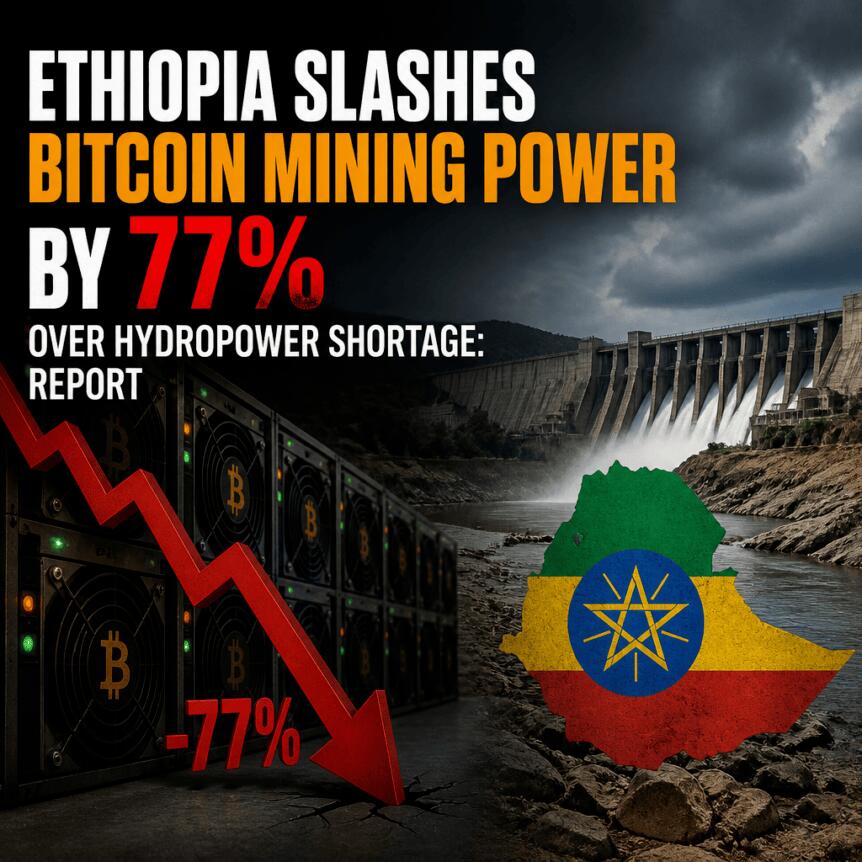
Ethiopia has reportedly cut the electricity it delivers to Bitcoin mining operations amid worsening drought conditions tied to El Niño, according to Bloomberg. The reduction reportedly brought miner power down to 23% of contracted levels as lower water inflows strained the country’s hydroelectric system. In a Tuesday report, Bloomberg said El Niño intensified dry weather across eastern Africa, reducing reservoir inflows by 20%. Ethiopian Electric Power (EEP) chief executive Ashebir Balcha told the outlet that the utility prioritized households and industrial customers as hydropower availability fell. Key takeaways Ethiopia reportedly reduced Bitcoin mining power deliveries to 23% of contracted levels due to a 20% drop in reservoir inflows, according to Bloomberg. EEP says it cut miner supply in stages—initially to 75% of contracted levels—before easing further to 50% and then 23%. With miners reportedly taking 35% of EEP revenue last fiscal year and using close to one-third of national electricity output, the decision highlights how mining supply depends on hydrology. EEP plans a reassessment in October, with potential for deeper reductions or electricity export restrictions. Hydropower shortage forces EEP to prioritize demand EEP’s decision underscores the vulnerability of mining operations that rely on affordable, flexible electricity sourced from hydropower. Bloomberg reported that EEP began by cutting deliveries to 75% of contracted levels, then lowered deliveries to 50%, before ultimately reaching 23% as reservoir inflows continued to weaken. The executive’s rationale was straightforward: in periods of constrained hydropower generation, utilities typically must allocate electricity to essential consumption first. Balcha indicated that EEP would reassess conditions in October, and that the company could respond with additional reductions or even restrict electricity exports to neighboring countries if supply tightness persists. For miners with long-term power arrangements, staged curtailments can materially affect operating costs and uptime. They may also raise questions about how renewable-leaning power contracts are structured during extreme weather—especially when the same electricity must serve both residential and industrial users. Why Ethiopia’s mining share makes curtailments consequential Bitcoin mining’s footprint in Ethiopia is unusually large relative to many jurisdictions, which is why a hydro-driven cut can ripple through both energy economics and broader mining capacity decisions. Bloomberg reported that miners accounted for 35% of EEP’s revenue in the last fiscal year and consume almost one-third of Ethiopia’s electricity output. That concentration means a contraction in deliveries affects EEP’s income stream, while also demonstrating how miners’ ability to operate can be limited by national supply constraints. The country’s low-cost hydropower has also helped attract overseas mining capacity. Bloomberg noted international interest, including Phoenix Group, which expanded its Ethiopian mining capacity to 132 megawatts in April 2025, following earlier additions covered by Cointelegraph.
عنوان اصلی (انگلیسی): Ethiopia slashes Bitcoin mining power by 77% over hydropower shortage: report
مشاهدهی خبر کامل در منبع ↗ بازگشت به Phoenixاین خلاصه بهصورت خودکار از کوینمارکتکپ ترجمه شده و ممکن است خطای ماشینی داشته باشد؛ صرفاً جهت اطلاعرسانی است و توصیهی معاملاتی نیست.