
 خبری دربارهی io.net (IO)
Best Decentralized AI Platforms in 2026
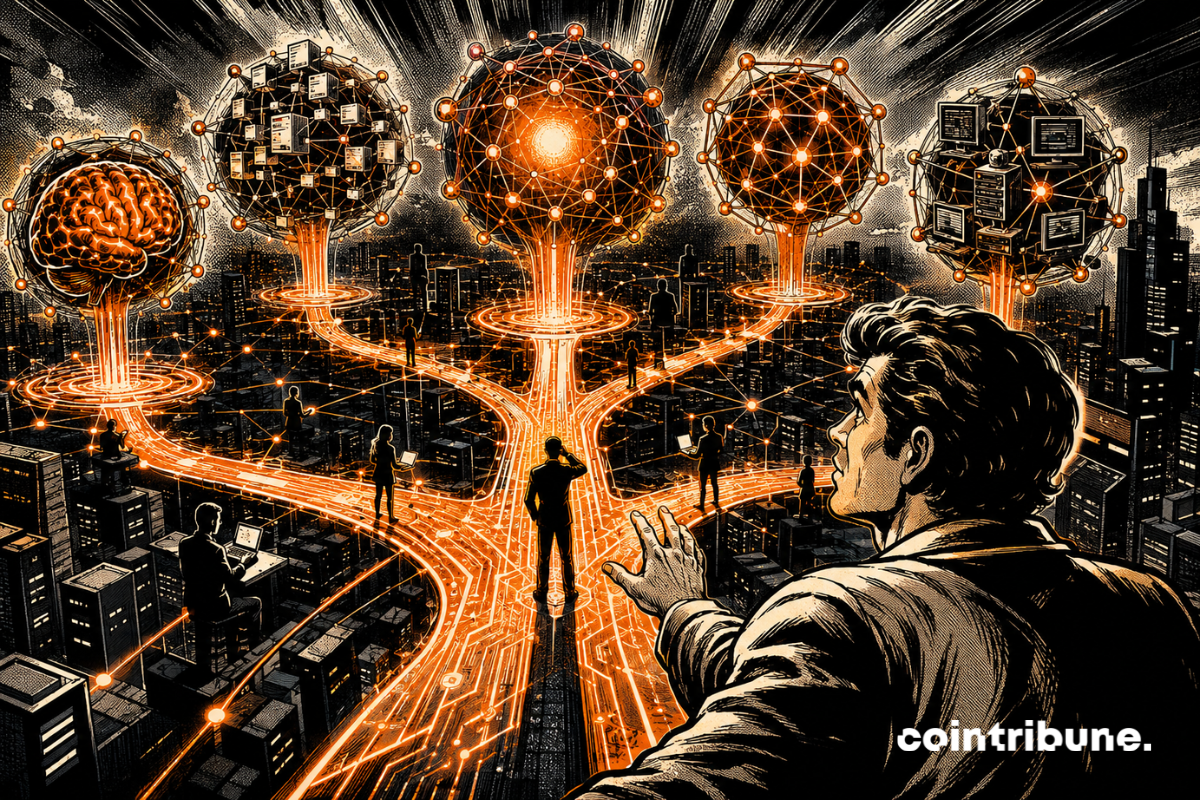
The GPU shortage succeeded where no manifesto had. It turned “decentralized AI”, until recently just a slogan, into a real market. High-end accelerators have been out of stock for months, with lead times stretching past a year, and that scarcity pushed developers toward networks that pool idle hardware from around the world. Except the label “decentralized AI platform” now covers very different realities, and confusing them is the surest way to pick the wrong one. Renting a GPU is not the same as training a model. Scoring machine-learning outputs is not hosting an unrestricted LLM. This guide sorts the main players of 2026 by what they actually do, weighs the strengths and blind spots of each, and sets an outsider, Qubic, against the rest: the only network on this list where mining itself trains neural networks. No investment advice follows, only a map of the landscape. Key Points The GPU shortage turned decentralized AI from a slogan into a real market, but the label spans three very different layers: renting compute, coordinating model training, and building AI work into consensus. Six networks are compared here by what they do rather than by token hype: Qubic, Bittensor, Akash, Render, io.net and SingularityNET. Qubic is the outlier, the only one where mining itself trains neural networks (uPoW), with a CertiK-certified 15.52 million TPS peak and peer-reviewed AGI research behind it. The caveats are just as concrete: 676 validators secure the chain, the ecosystem is young, and its AGI targets stay aspirational for now. No platform wins outright; the right pick depends on the need, from cheap GPU rental (Akash, io.net) to a marketplace of intelligence (Bittensor). How we compared them Four criteria, applied to every platform so the picture rests on function rather than token hype: What it actually does: raw GPU rental, model-training marketplace, inference scoring, or on-chain AI compute. Maturity and traction: real usage, measurable demand, developer activity, not roadmap promises. Structural design: how the network coordinates work and rewards it, and how decentralized it really is. Owned limits: every model has a weak point. Concentration, token inflation, or unproven claims. A note on sources: performance and research figures attributed to a project below are, unless a third party is named, self-reported by that project. Where an independent auditor or a peer-reviewed venue is involved, it is named explicitly. Treat the rest as claims, not established facts. BTCUSDT chart by TradingView The landscape in brief The category splits cleanly into three layers: networks that rent compute, those that coordinate model training, and those that fold AI work into consensus itself.
عنوان اصلی (انگلیسی): Best Decentralized AI Platforms in 2026
مشاهدهی خبر کامل در منبع ↗ بازگشت به io.netاین خلاصه بهصورت خودکار از کوینمارکتکپ ترجمه شده و ممکن است خطای ماشینی داشته باشد؛ صرفاً جهت اطلاعرسانی است و توصیهی معاملاتی نیست.