
 خبری دربارهی Chamber (DHT)
CLARITY Act Fails to Clear Senate Vote
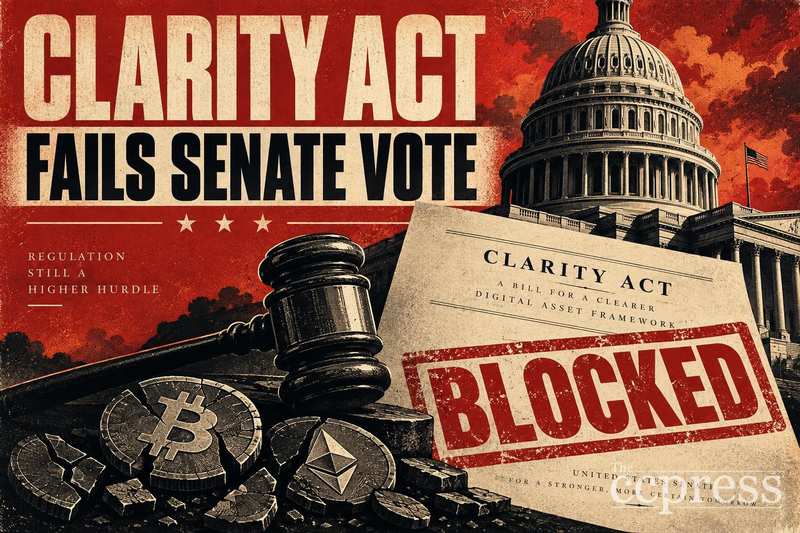
The CLARITY Act just hit a wall in the Senate. According to reporting from Decrypt, the chamber failed to advance the landmark crypto market-structure bill on September 15, 2026, leaving the industry’s best shot at federal regulatory clarity stalled and Bitcoin sliding. The bill in question is H.R. 3633, formally the Digital Asset Market Clarity Act of 2025, the House-engrossed text that names the legislation the CLARITY Act. The Senate had been building toward this moment for months. For related coverage, see Senate to Vote on Clarity Act Sept. 15 in Key Crypto Regulation Step. But this was not a final vote to kill the bill. Decrypt describes the action as a cloture motion, a procedural step to advance H.R. 3633 to debate, not a vote on passage itself. For related coverage, see Stablecoin Legislation Stalls: GENIUS Act Fails Senate Vote. What Happened in the CLARITY Act Senate Vote Senators fell short of the votes needed to move forward. Decrypt reported 49 in favor and 50 against, well below the 60-vote threshold required to invoke cloture. The official roll-call record was not independently accessible, so the tally rests on that single report. For related coverage, see House Passes CLARITY Act as Senate Weighs Crypto Rules. That distinction matters. A failed cloture vote blocks the bill’s advancement to debate; it is not the same as the Senate formally rejecting the legislation. Anyone reading “fails to clear Senate vote” should understand the procedural scope here. For related coverage, see CFTC Chair Readies Crypto Rules If Clarity Act Fails. The Senate had been widely expected to take up the CLARITY Act on September 15, the same day the vote reportedly collapsed. The chamber’s inability to reach 60 signals a coalition that never came together. For related coverage, see Galaxy CEO: US Crypto Legislation at Risk if Clarity Act Stalls. What the Setback Means for U.S. Crypto Regulation H.R. 3633 is a market-structure bill. The House-engrossed text proposes a framework splitting oversight of digital-asset offers and sales between the SEC and the CFTC, with registration regimes for intermediaries at both agencies. One nuance often lost in the coverage: Section 103 of that House text expressly excludes permitted payment stablecoins and banking deposits from its definition of a digital commodity. That carve-out means stablecoin-yield fights are a separate battle from the bill’s core commodity category, at least in the House version. A caveat is essential here. The official document is the House-engrossed text, not the September 2026 Senate draft. Decrypt reported that a revised 630-page Senate draft had addressed some ethics and developer-liability concerns before the vote, but that later language could not be verified against the fetched bill. The failure leaves the SEC-CFTC jurisdictional question exactly where it was: unresolved.
عنوان اصلی (انگلیسی): CLARITY Act Fails to Clear Senate Vote
مشاهدهی خبر کامل در منبع ↗ بازگشت به Chamberاین خلاصه بهصورت خودکار از کوینمارکتکپ ترجمه شده و ممکن است خطای ماشینی داشته باشد؛ صرفاً جهت اطلاعرسانی است و توصیهی معاملاتی نیست.