
 خبری دربارهی کرونوس (CRO)
Bitget و Liquid Breaches هک کریپتو Q3 را به 1.2 میلیارد دلار سوق می دهند
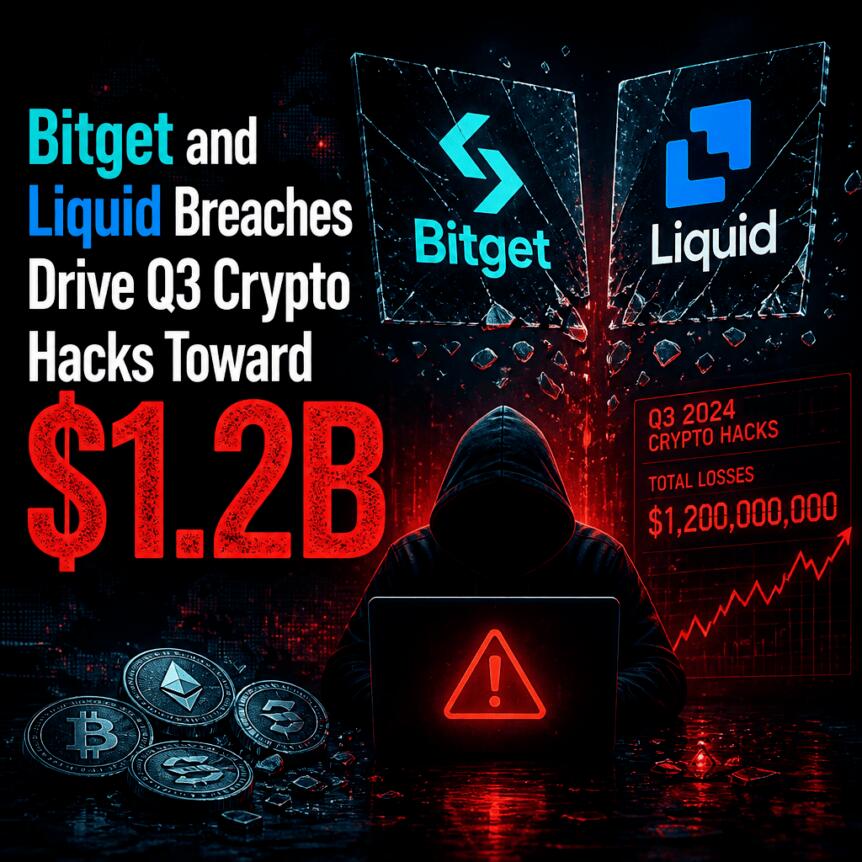
Crypto hacks drove an estimated $1.18 billion in losses across 107 recorded incidents in the third quarter of 2026, according to a report by security firm Hacken. While that figure reflects a particularly heavy quarter, the same dataset also suggests that a meaningful share of stolen value was later returned, reversed, or covered. Hacken’s analysis points to a breakdown in responsibility: 77% of the total—about $906 million—was linked to compromised third-party suppliers, developer tools, publicly disclosed vulnerabilities that had not been deployed, or other components outside typical security review scopes. The quarter also featured several headline-grabbing breaches, including a $387 million Bitget hack, a $320 million Liquid Network exploit, a $120 million Tectonic exploit, and a Coldcard firmware vulnerability associated with an estimated $115 million loss. Key takeaways $1.18 billion was reported lost in Q3 2026 across 107 crypto hack incidents, with the quarter described by Hacken as the most damaging since Q1 2025. Supplier and tool-chain failures accounted for 77% (about $906 million) of losses, highlighting security gaps beyond audited code. Smart contract attacks were the most common vector by incident count, totaling $228 million across 71 incidents. Roughly 33% of gross losses—about $387 million—was later returned or reversed, while $384 million (32%) remained unresolved. Most incidents were smaller: 98 of the 107 events involved losses under $10 million, and the median loss was $670,000. Why Q3 was unusually severe for crypto security Hacken frames Q3 2026 as a step change in damage compared with earlier quarters, noting it was the most damaging period for crypto hacks since Q1 2025. In that earlier quarter, Bybit suffered $1.4 billion in losses attributed to North Korea, pushing total losses to $1.6 billion—a reference point Hacken uses to contextualize how heavy Q3 2026 was. Even within Q3 2026, the distribution of harm was uneven. Hacken reports that about 80% of losses were concentrated in four of the largest incidents. At the other end of the spectrum, 98 of the 107 incidents recorded losses below $10 million, and the median incident loss came to $670,000. That combination—few very large events plus many smaller ones—helps explain why aggregate figures can mask the scale of day-to-day exposure for many teams. The role of supply chains and external tooling One of the most consequential findings in Hacken’s quarter overview is where the failures tended to occur. According to the report, 77% of losses stemmed from issues that often fall outside traditional internal security reviews: compromised third-party suppliers, weaknesses in developer tools, fixes that were publicly disclosed but not implemented, and other external components. This distinction matters for investors and protocol operators because it shifts the focus away from purely “smart contract code correctness” and toward the broader ecosystem that modern systems depend on.
عنوان اصلی (انگلیسی): Bitget and Liquid Breaches Drive Q3 Crypto Hacks Toward $1.2B
مشاهدهی خبر کامل در منبع ↗ بازگشت به کرونوساین خلاصه بهصورت خودکار از کوینمارکتکپ ترجمه شده و ممکن است خطای ماشینی داشته باشد؛ صرفاً جهت اطلاعرسانی است و توصیهی معاملاتی نیست.